- Location: Echo Point Lookout, Katoomba. Coordinates: -33.7303, 150.3126. It's a 30-minute walk or short bus ride from Katoomba Station.
- Height: Meehni (922 m), Wimlah (918 m), and Gunnedoo (906 m).
- Popularity: One of Australia’s most photographed sites. For a quieter visit, aim for early morning or weekdays.
- Formation age: The rocks date back 200 million years, shaped by erosion and ancient volcanic activity.
- Cultural significance: The site is connected to several Aboriginal groups including the Gundungurra, Darug, Wiradjuri, and Dharawal peoples.
Curious about the Three Sisters in Blue Mountains? Here’s what makes them famous
Tucked into the Blue Mountains’ rugged escarpments, the Three Sisters are iconic sandstone peaks above the Jamison Valley near Echo Point in Katoomba. Shaped by millions of years of erosion and steeped in Aboriginal legend, they’re a must-see. Here’s what to know before you visit.
What are the Three Sisters and why are they famous?
1/3
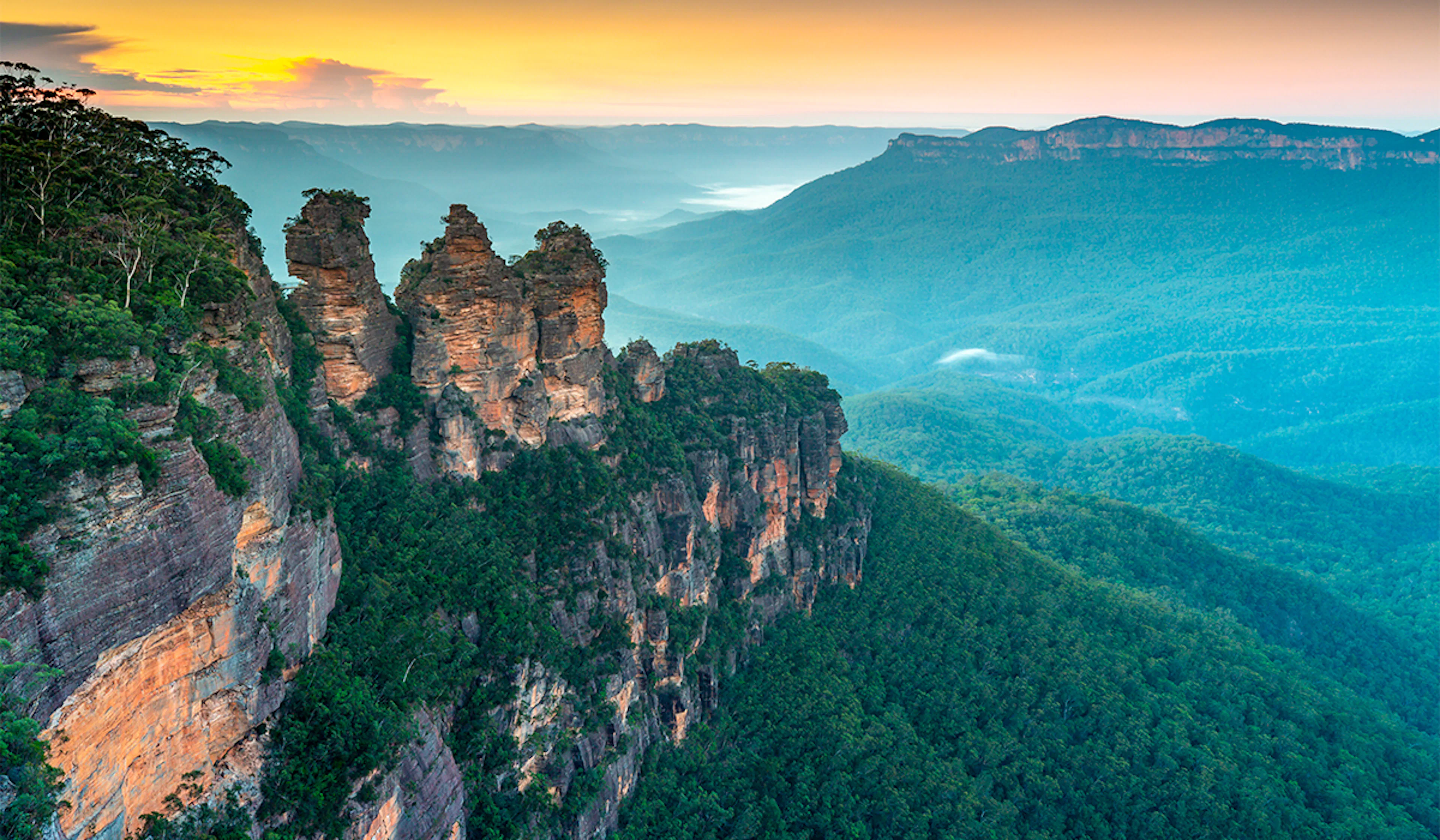
The iconic rock formation of the Blue Mountains
The Three Sisters are sandstone pillars rising 922, 918, and 906 meters above sea level at Echo Point in Katoomba, within the Greater Blue Mountains World Heritage Area. Shaped by erosion, they glow most dramatically at sunrise and sunset.
Aboriginal legend behind the Three Sisters
The Three Sisters are tied to an old Aboriginal story, passed down through generations. There are different versions, but they all speak to protection, loss, and transformation. It’s this cultural depth that gives the site meaning beyond the view.
A national symbol of natural beauty
The Three Sisters are the Blue Mountains’ iconic symbol, featured in campaigns, brochures, and social media. Beyond their beauty, they hold cultural meaning and, with easy access from Sydney, are a must on most itineraries.
Key facts about the Three Sisters
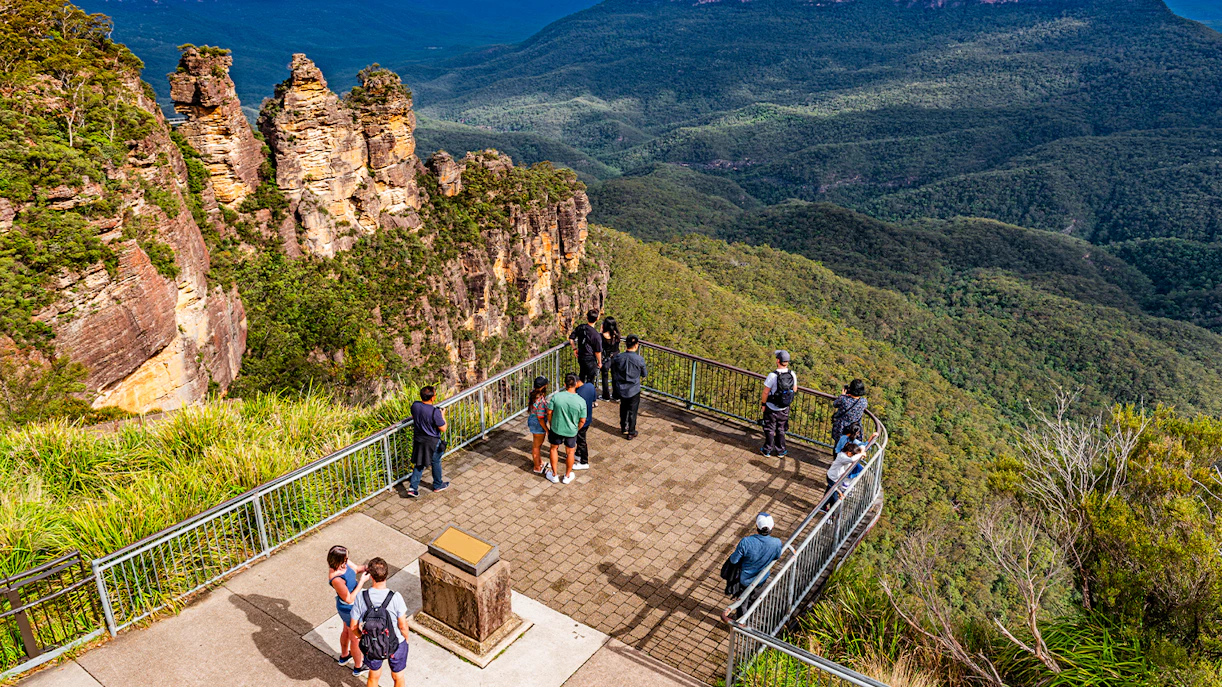
What is the story of the Three Sisters?
There are many versions of the legend, but the most common tells of three sisters—Meehni, Wimlah, and Gunnedoo—who fell in love with men from another tribe. Forbidden to marry, the men tried to take them, sparking conflict. A witchdoctor turned the sisters to stone for protection but was killed before reversing the spell, leaving them frozen in time.
Another version speaks of Tyawan, a father who left his daughters safe while he foraged near the Bunyip. When the creature attacked, he turned them to stone with a magic bone, but dropped it and became a lyrebird. The sisters remain petrified, with Tyawan’s spirit said to linger in the valley.
Where to see it from?
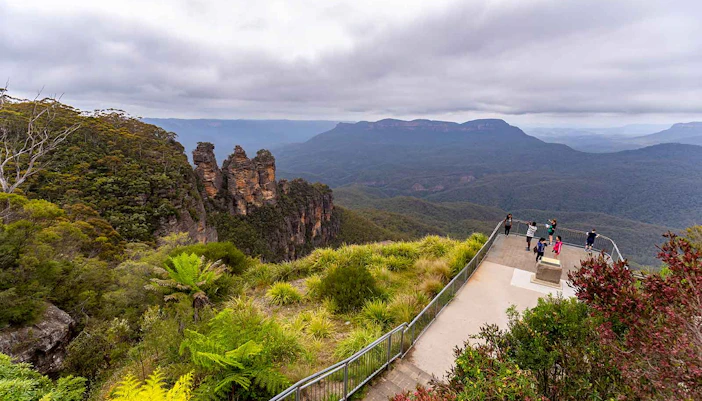
Echo Point Lookout
This is the main viewing platform which offers clear views, accessibility, and facilities like restrooms, a visitor center, and telescopes. It’s usually busy. The views are fantastic, especially during the golden hours.
Read more about the Echo Point.
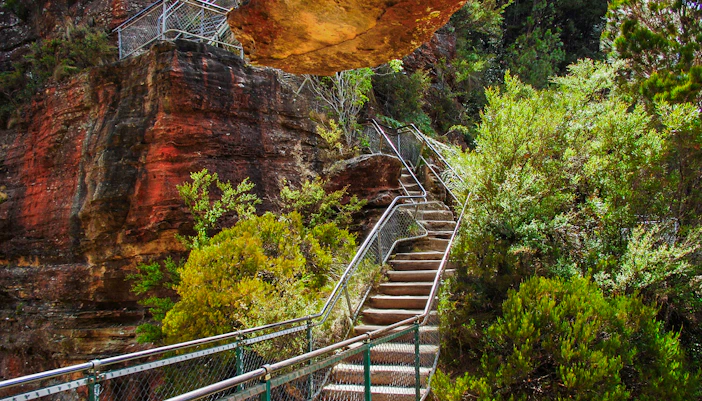
Giant stairway
This trail starts from Echo Point and descends beside the formations. It’s steep with over 800 steps and can be slippery, but if you’re physically up for it, the close-up perspective is worth it.
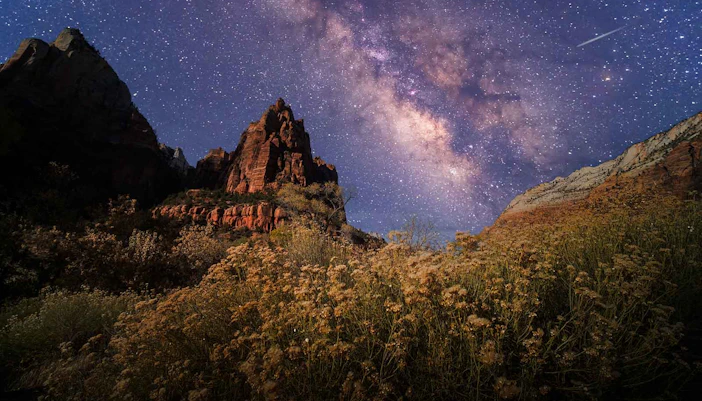
Night viewing
Soft lighting illuminates the rock face after dark. If you’re staying overnight in Katoomba, a post-dinner stroll to Echo Point gives you a quieter, more atmospheric experience.
Travel tips for visiting the Three Sisters
- Pick the right season: Spring (Sept–Nov) and Autumn (Mar–May) offer pleasant weather and fewer crowds. Summer can be hot and packed.
- Avoid midday crowds: Visit early morning or late afternoon for fewer people and better lighting.
- Getting there: Trains from Sydney to Katoomba are frequent and affordable. Driving offers flexibility if you plan to explore beyond Echo Point.
- Pack properly: Bring layered clothing, a rain jacket, sturdy shoes, and sun protection. Conditions can change quickly.
- Facilities are there, but plan ahead: There’s paid parking, toilets, a café, and an information center at Echo Point. But nearby trails may have no amenities.
- Respect the site: Stick to paths, don’t feed wildlife, and avoid touching or climbing rock formations
- Engage with the culture: Join a guided Aboriginal tour or visit nearby cultural centers to understand the deeper significance of the site.
Frequently asked question about the Three Sisters in Blue Mountains
No, climbing the Three Sisters is not allowed. It’s a protected site with cultural and environmental significance. You can get close by walking part of the Giant Stairway, which leads down beside the formation.
Yes. Echo Point Lookout, where most visitors view the Three Sisters, is completely free and open to the public. However, some nearby attractions or guided experiences may have a fee.
Echo Point is about a two-hour drive from Sydney, depending on traffic. If you prefer public transport, trains from Central Station to Katoomba run regularly and take around two hours as well.
Yes. Echo Point has accessible paths and viewing platforms. The lookout area is paved and designed to accommodate wheelchairs and strollers.
Early morning (sunrise) gives you soft golden light, while late afternoon creates a dramatic silhouette. If you’re aiming for clear shots, avoid midday when crowds peak and the light flattens the landscape.


